The tax environment in India is experiencing one of the most transformative years in India. As GST reforms 2025 are implemented, corporate taxes structures are modified, and international tax systems are increasingly restricting, the year presents more changes than any before in the life of every Chartered Accountant to keep up with. To compliance-managing CAs, advisory, audit and cross-border transactions the year 2025 is not merely a year, but an arrival of a new streamlined, technology-driven, globally-integrated tax ecosystem.
The following is a detailed description of all the significant changes in GST, Corporate Tax and International Tax- explicated in a clear, systematic and easily comprehensible manner.
GST Reforms 2025: The greatest reform since 2017
The GST Council announced the next generation of GST architecture called GST 2.0, which is geared towards simplicity, rationalisation of rates and compliance through automation. The reforms became applicable on 17th September 2025 after CBIC notifications dated 17 th September 2025, after the 56 th GST Council meeting.
Key Themes of GST Reforms
Structural Reforms
- Amendments inverted duty structures: This is a long pending issue by the manufacturers that is now settled by harmonizing the input and output tax rates.
- Classification of goods and services simplified: This helps to minimize arguments and enhance uniformity among industries.
- Stability in tax regime: Provides certainty in the long run business plans and pricing strategies.
These organizational reforms open up working capital, litigation is minimized and the manufacturing process within the country is facilitated- one of the main aims of Atmanirbhar Bharat.
Rationing of the Rates
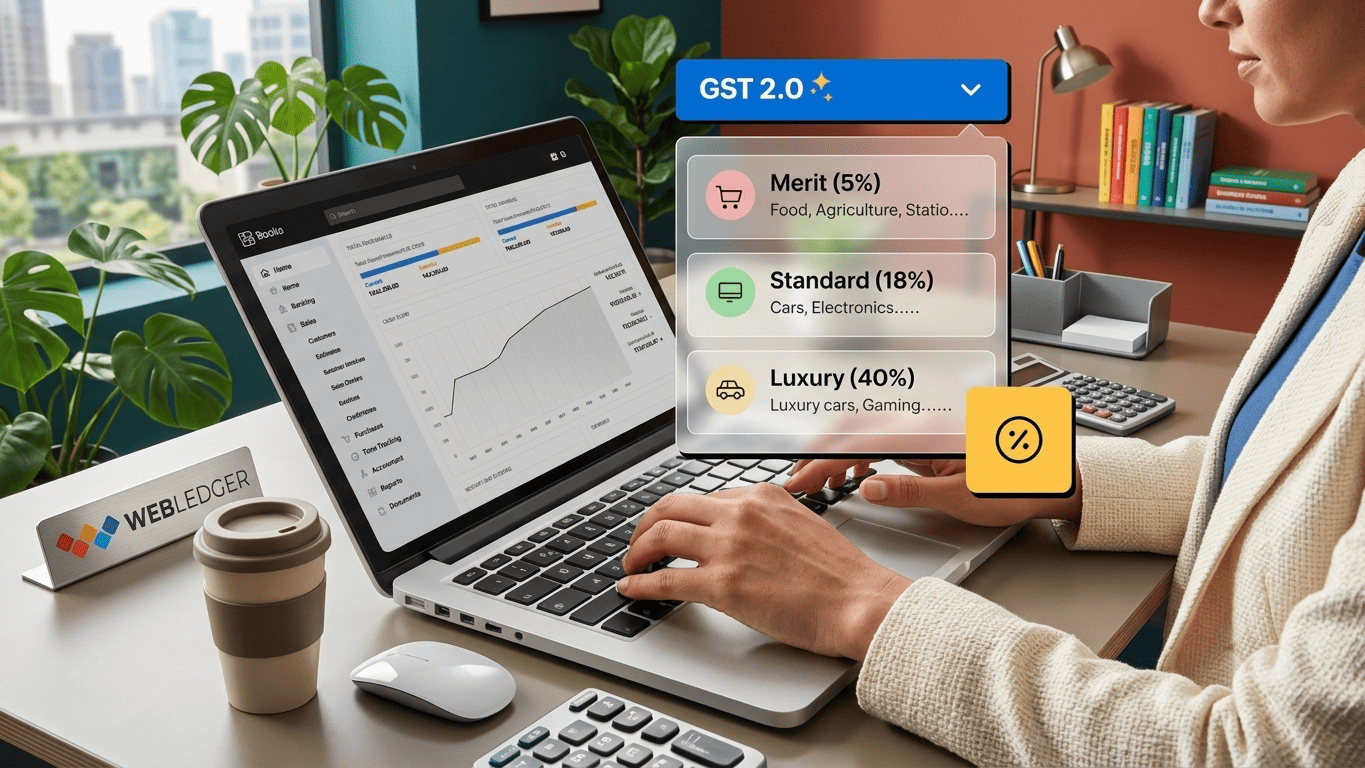
This is where the largest GST slabs transformations in India 2025 are introduced. GST to be reduced to two main slabs, namely 5 percent and 18 percent.
The 12 percent and 28 percent slabs were eliminated mostly.
The special category is added to 40 percent of goods.
Majority of the FMCG, essentials, electronics and insurance are now in reduced slabs.
These new GST rates 2025 will stimulate consumption, price cuts and general economic growth.
Ease of Doing Business
- One-stop GST returns being filled in by all businesses.
- Case-specific marketplace automation of refund processing of exporters and IDS.
- Automated, less paperwork, MSME registration.
- Enhanced workflow in the departments and resolving issues faster.
Such upgrades play an important role in GST modifications to businesses, especially SMEs.
What Is Getting Cheap and What Is Getting Expensive?
Cheaper
- Elimination of 12% slab: They were transferred to 5 or 18 percent.
- Electronics and white goods: ACs, TVs, washing machines, etc. fell by 28 percent to 18 percent.
- Daily necessities: Tooth paste, umbrellas, bicycles, small appliances – 5%.
- Insurance: Health and life insurance now tax-free.
- Small cars: Reduced from 28% to 18%.
The most advantageous industries are:
- Textiles
- Agriculture
- Automotive
- FMCG
- Fertilisers
- Renewable energy
- Insurance & Healthcare
Costlier
- Sin goods: Tobacco, gutka, pan masala – 40 percent.
- Online gaming: Repackaged and taxed 40%.
Timeline of GST Reforms
- Reforms were declared by the Prime Minister on 15th of August this year.
- The GST Council endorsed the GST 2.0 structure on 3rd of September this year.
- CBIC makes notifications on 17th September this year.
- New slabs and reforms came into effect on 22nd September this year.
Impact of GST Reforms 2025
For Businesses
- Reduction in GST rates = low cost of operation.
- Portfolio compliance with pre-filled returns.
- Better liquidity as a result of faster refunds.
- Less classification controversy.
- Greater level of transparency and predictable tax regime.
For Consumers
- Inexpensive white goods, necessities and electronics.
- The greater disposable income – the more consumption.
For Economy
- Strengthen competitiveness of manufacturing.
- Promotion of formalisation of MSME.
- Expansion of tax base.
- Improved correspondence to international efficiency models of taxation.
Corporate Tax Updates 2025
Although the news of GST reforms is the order of the day, the Technology-driven moderation and timely and technology-driven improvements in Corporate Tax norms are also being experienced.
Reduced Compliance Burden
- Ready complete corporate income tax returns of eligible companies.
- Automated TDS, GST and financial statements reconciliation.
- Further implementation of faceless audit.
Such modifications make sure that companies do not waste more time on paperwork, but are able to do more strategic planning.
Incentives in R&D and Innovation
- New categories of deductions on R&D intensive industries.
- Bring back deductions weighted (partially in certain sectors)
- The financier is in favor of AI, biotech, space technology, and renewable energy.
Start-Up & SME-Focused Changes
- Expansive description of qualified startups.
- Lower classes of corporate tax.
- Angel tax norms relaxation of foreign investors.
These reforms make the corporate environment more innovation-friendly.
The CA International Tax Updates All CA Should Keep Track of in 2025
The current status of cross border taxation is still developing at a tremendous pace with global standards of transparency becoming stronger.
Minimum Corporate Tax
- India is gearing towards conforming to the 15 percent international minimum taxation regulation.
- Affects MNCs that have operations all over the world.
- Makes profit shifting difficult.
Revised Transfer Pricing Paperwork
- Expansive Master File and Local File specifications.
- Increased auditing on related-party dealings.
- Focus on economic substantia rather than its form.
Streamlined Guidelines on Indian Companies expansion abroad
- New principles on foreign subsidiary reporting.
- Foreign remittance documentation relaxation.
- Digitalised compliance using the modernised FEMA systems.
Increased Crackdown on Tax Havens
- Improved communication with partnering countries.
- Tighter controls on high value offshore dealings.
Conclusion: 2025 is a Tipping Point in Indian Taxation
The Indian tax regime has put 2025 on its calendar to simplify its slabs of GST as well as making it easier to comply with corporate taxes and to be on the world taxation standards. For CAs, this means:
- Staying updated
- Proactive advising of the clients.
- Using digital tools of compliance.
- Going with automation and analytics to be accurate.
With India on a path of an increasingly transparent, efficient, and globalized taxation system, CAs are in a better position to help businesses in this country shift to a new stage and make sound financial decisions.
FAQ’s
The major GST reforms for 2025-26 focus on rate rationalisation, simpler tax classification, reduced compliance burden, automation, and improved ease of doing business.
The GST rate structure was rationalised around two main rates: 5% as the merit rate and 18% as the standard rate, along with a special 40% rate for selected goods and services.
The revised GST rates for most goods and services became effective from 22 September 2025, subject to specific exceptions and implementation provisions.
The GST reforms largely rationalised the earlier 12% and 28% slabs by moving products and services into the revised 5%, 18%, or applicable special-rate categories.
Several daily-use products, electronics, white goods, small cars, and other categories received lower GST rates. Examples include toothpaste, bicycles, certain appliances, TVs, air conditioners, and small cars.
The special 40% GST rate applies to selected de-merit, luxury, and specified categories, including certain betting, casino, gambling, online money gaming, and specified high-value vehicles and goods.
Yes. The GST Council recommended exemption for individual health insurance and individual life insurance policies, including specified reinsurance services, under the 2025 reforms.
The reforms aim to simplify tax classification, reduce compliance complexity, improve working capital, support faster refunds, and make GST processes easier for SMEs and other businesses.
Businesses may benefit from simpler classification, lower tax rates in several sectors, improved liquidity, and reduced compliance complexity, while consumers may benefit from lower prices on many essential products and services.
Accounting software can help businesses update tax rates, generate GST-compliant invoices, maintain transaction records, reconcile data, prepare GST reports, and reduce manual compliance work.